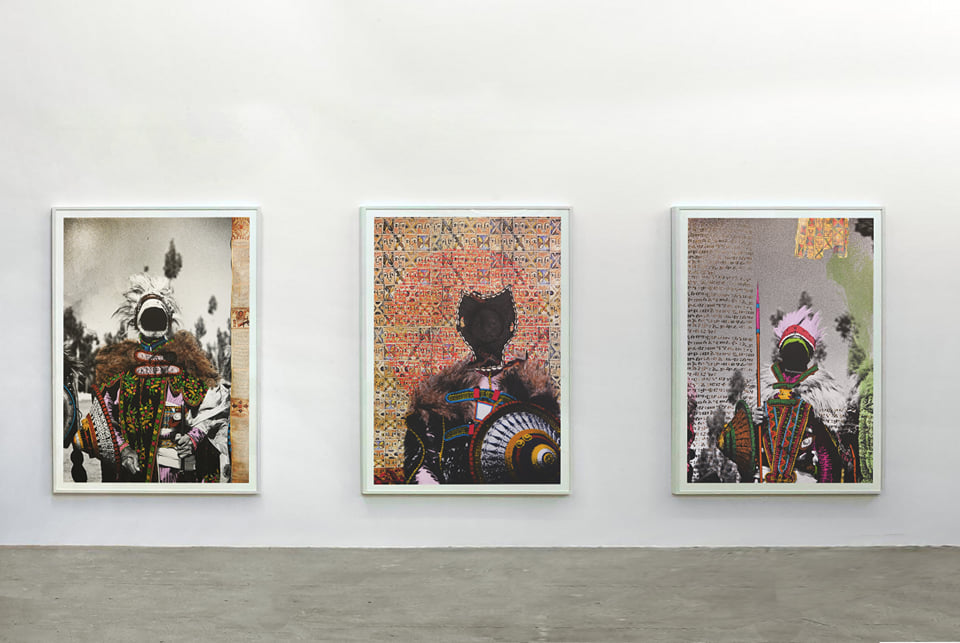
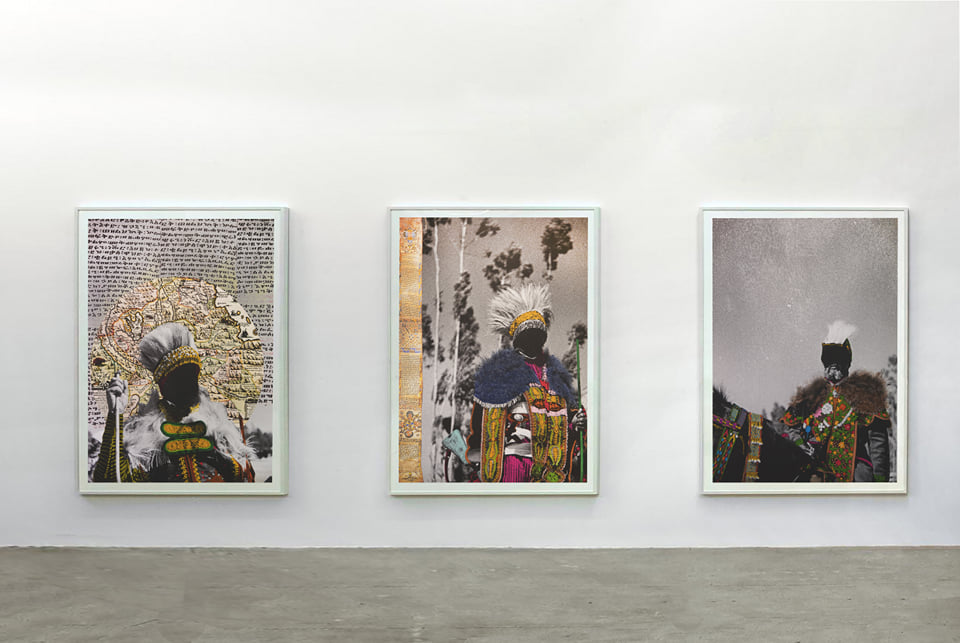
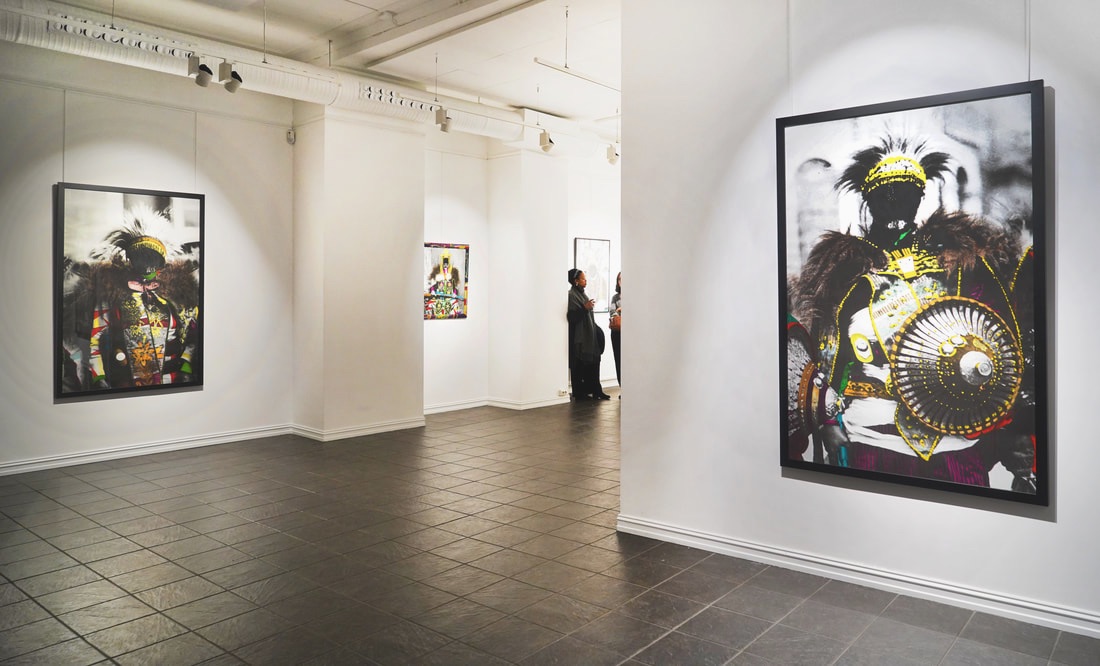
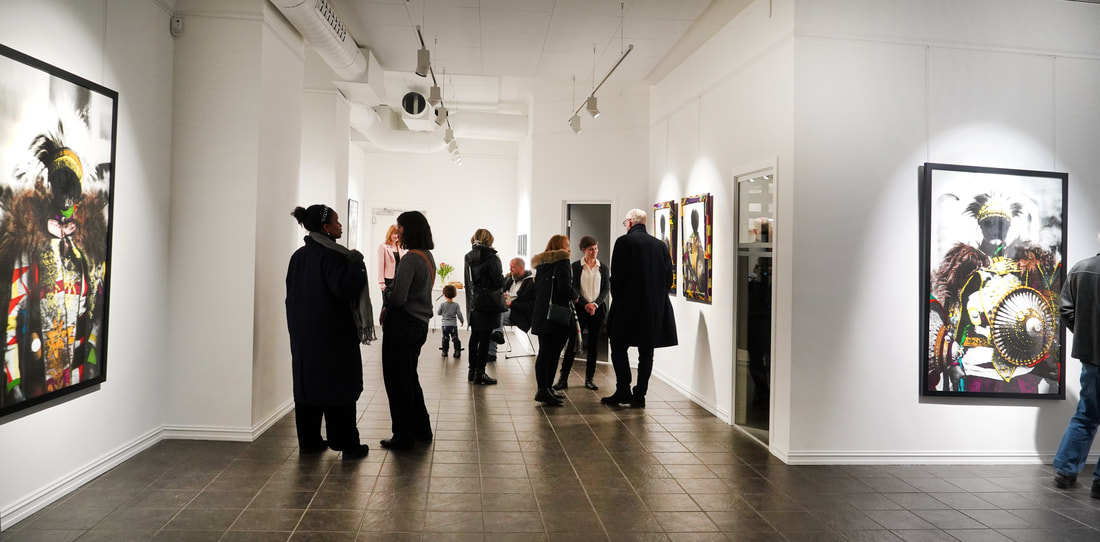
Revenants, 2019, from the series archival photos. print on matt photo paper, from digitally reproduced and artist-manipulated photograph Anthropological Archives, 165 × 112cm each, wendimagegn belete.
Revenant
This body of work contains old celluloid photographs and portraits taken by a Westerners during the colonial era. Specifically, images with an intimate gesture of individual faces of Ethiopian unanimous patriots, and indigenous people that stood with contested costume. I appropriate and elevate these photos through a physical act of hand colorizing and bodily engagement, exploring the tactile potential of photography. The process intend to bring the past into present to open important dialogue and an attempt to undo the digital onto a more organic naïve approach. these people have been photographed and their images have also been used in the commercial world and when the images reproduced multiple times things get lost in translation. the archival photographs carried a symbolic and ambivalent meaning. I enlarge the scale of the images colorize them and disrupt the portrait into a more subjective black face to add a f haunting quality, empowered it to tell a collective story
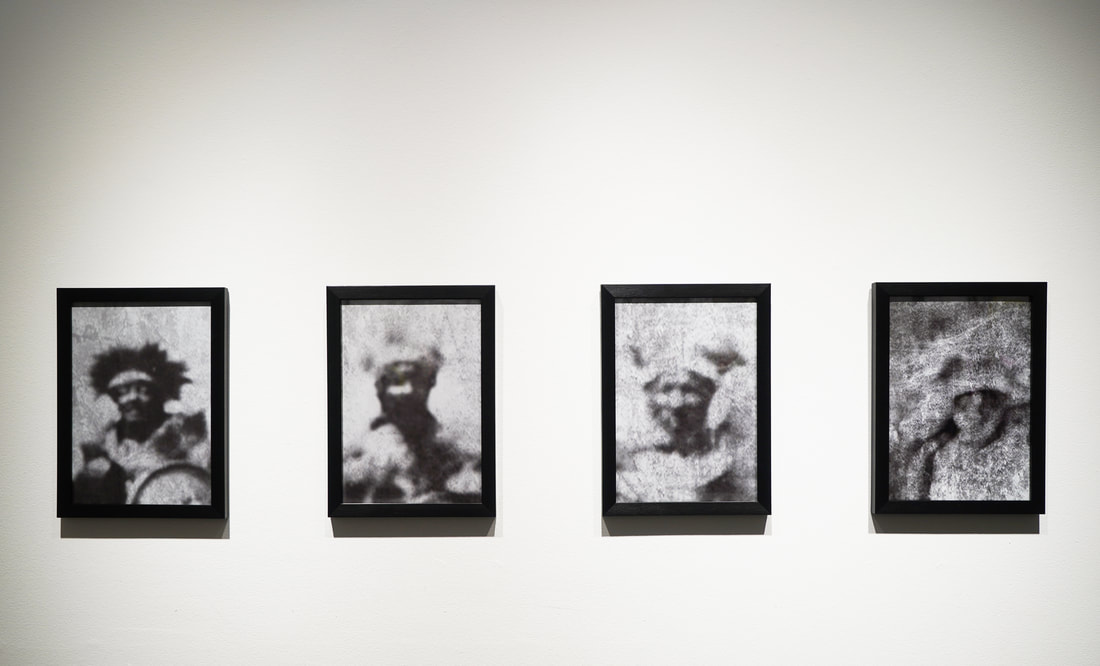
This work reclaims and reimagines a colonial ethnographic photograph through hand-coloring and gesture. By drawing directly onto the archival image, I intervene in a visual history that once objectified Indigenous and African bodies for Western study. The deliberate act of blacking out the face transforms the subject from an exposed specimen into a protected presence. What was once over-seen becomes unseen — hidden, sovereign, ungraspable.
The vivid patterns and hand-applied colors return vitality, care, and individuality to the figure, layering imagination and ancestral symbolism over the mechanical gaze of the camera. The surface becomes a meeting point between past and present — between the colonial archive and my own body, which marks, touches, and reanimates.
In this gesture, absence becomes resistance, and color becomes a language of repair. The black void is not erasure but expansion — a space where the silenced subject transcends documentation and reclaims their power through invisibility.
This work reclaims and reimagines a colonial ethnographic photograph through hand-coloring and gesture. By drawing directly onto the archival image, I intervene in a visual history that once objectified Indigenous and African bodies for Western study. The deliberate act of blacking out the face transforms the subject from an exposed specimen into a protected presence. What was once over-seen becomes unseen — hidden, sovereign, ungraspable.
The vivid patterns and hand-applied colors return vitality, care, and individuality to the figure, layering imagination and ancestral symbolism over the mechanical gaze of the camera. The surface becomes a meeting point between past and present — between the colonial archive and my own body, which marks, touches, and reanimates.
In this gesture, absence becomes resistance, and color becomes a language of repair. The black void is not erasure but expansion — a space where the silenced subject transcends documentation and reclaims their power through invisibility.